Fieldscope Time Tracker
A kiosk time clock for a team that doesn't do apps. Caught a real security exploit within weeks of launch.
- Role
- UX Designer & Builder
- Client
- Industrial fabrication company
- Timeline
- 3 months
- Impact
- 1 — Security exploit caught in week one
The Problem
Hours reported word-of-mouth, with no accountability or clean payroll data.
What I Built
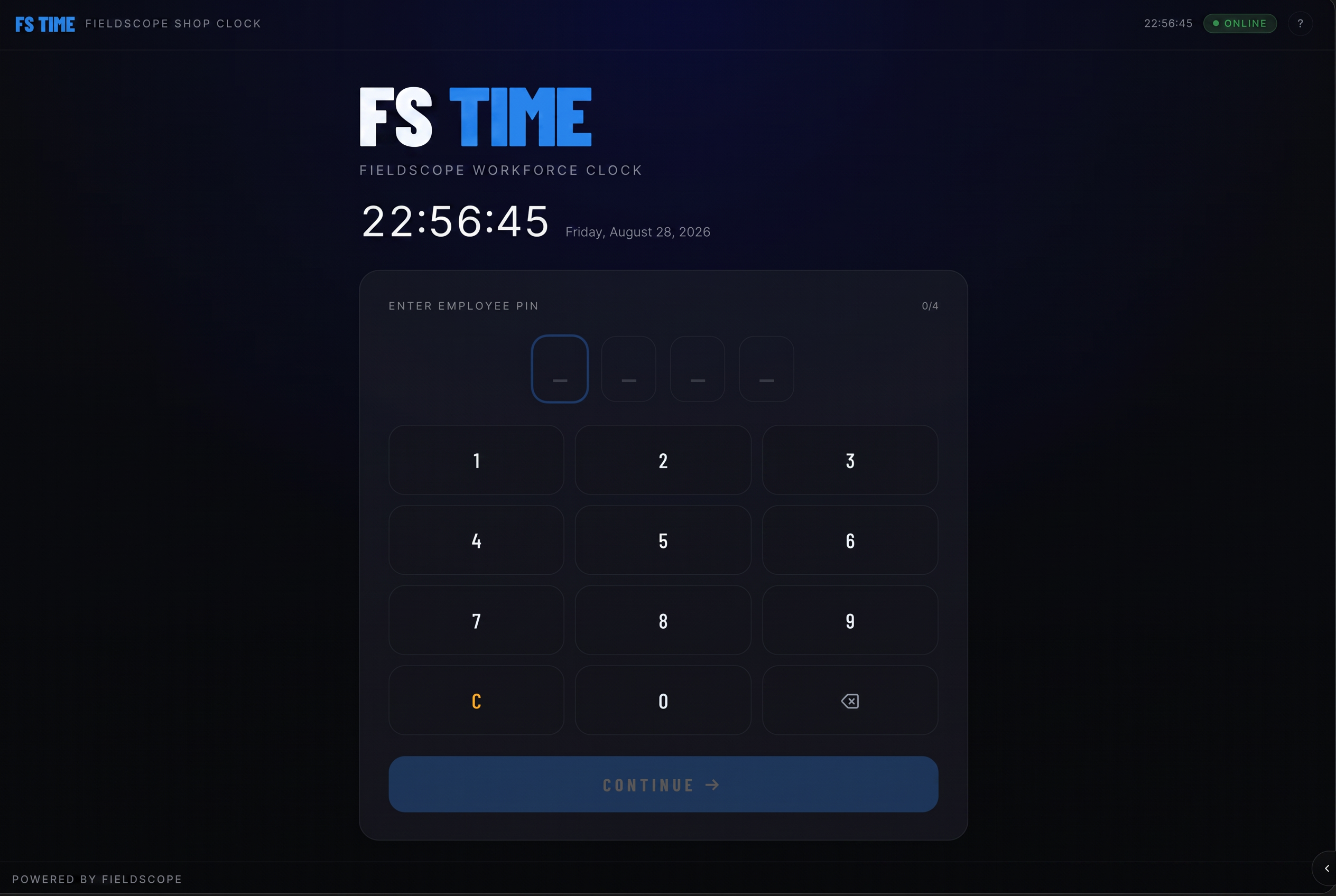
A kiosk time clock with oversized touch targets, dark mode, and offline support.
The Result
Caught a real clock-in security exploit within weeks of launch.
Overview
A kiosk-based time clock built for the same client, replacing an honor-system where hours were reported word-of-mouth from worker to manager.
Problem
No system of record existed for hours worked. Workers self-reported time verbally, leading to inflated hours, no accountability, and no clean data for payroll or PTO/OT tracking.
Research
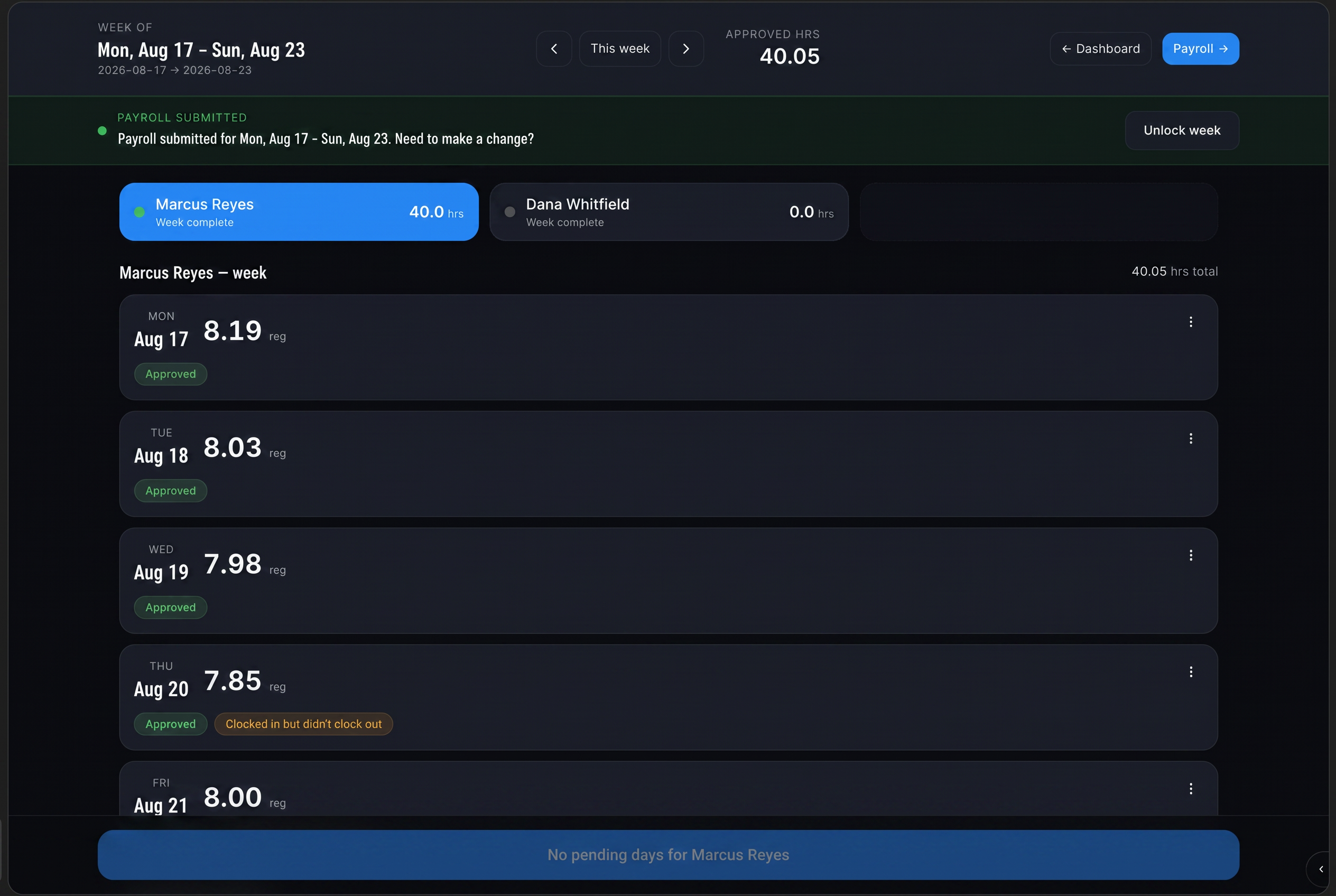
Discovery surfaced different requirements from each stakeholder. Shop floor workers are large men with large, often greasy hands working in a physical shop environment — meaning standard mobile touch targets and precise tapping were the wrong assumption from the start. The shop manager specifically wanted a dark-mode kiosk interface. Accounting needed a clean, already-approved handoff, not raw punch data to sort by hand.
Process
The CEO requested a kiosk time clock to keep pace with a growing shop and assembly team — the existing honor-system approach for tracking hours hadn't scaled with headcount.
Solution
Designed for the Real User
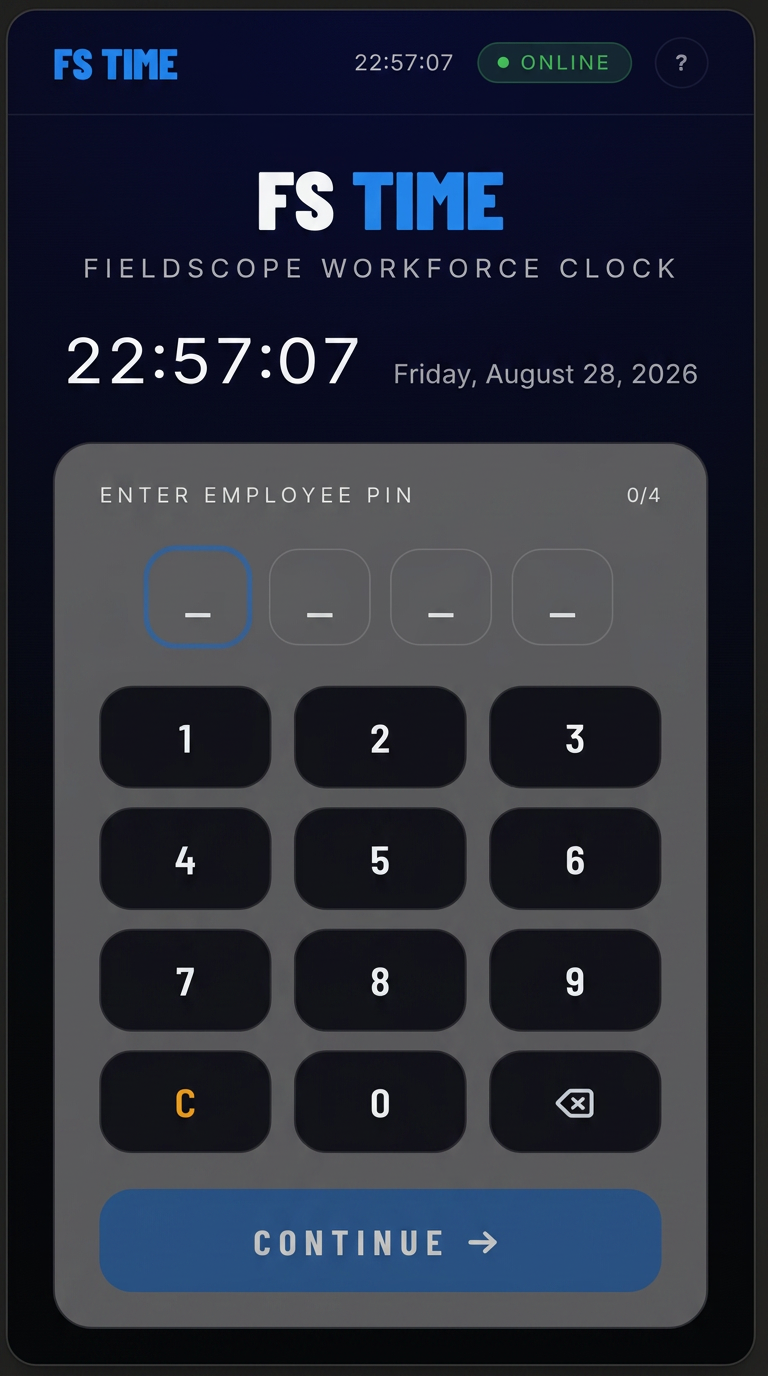
Deliberately simple onboarding — workers set a PIN once, then clock in/out using large touch targets, with an in-kiosk help section always available. Built offline-capable to handle frequent storm-related outages and shop-floor dead zones common in this part of Texas; any clock events captured offline are automatically queued and synced once connection returns. The kiosk itself shipped in dark mode, per the shop manager's request.
The Security Fix
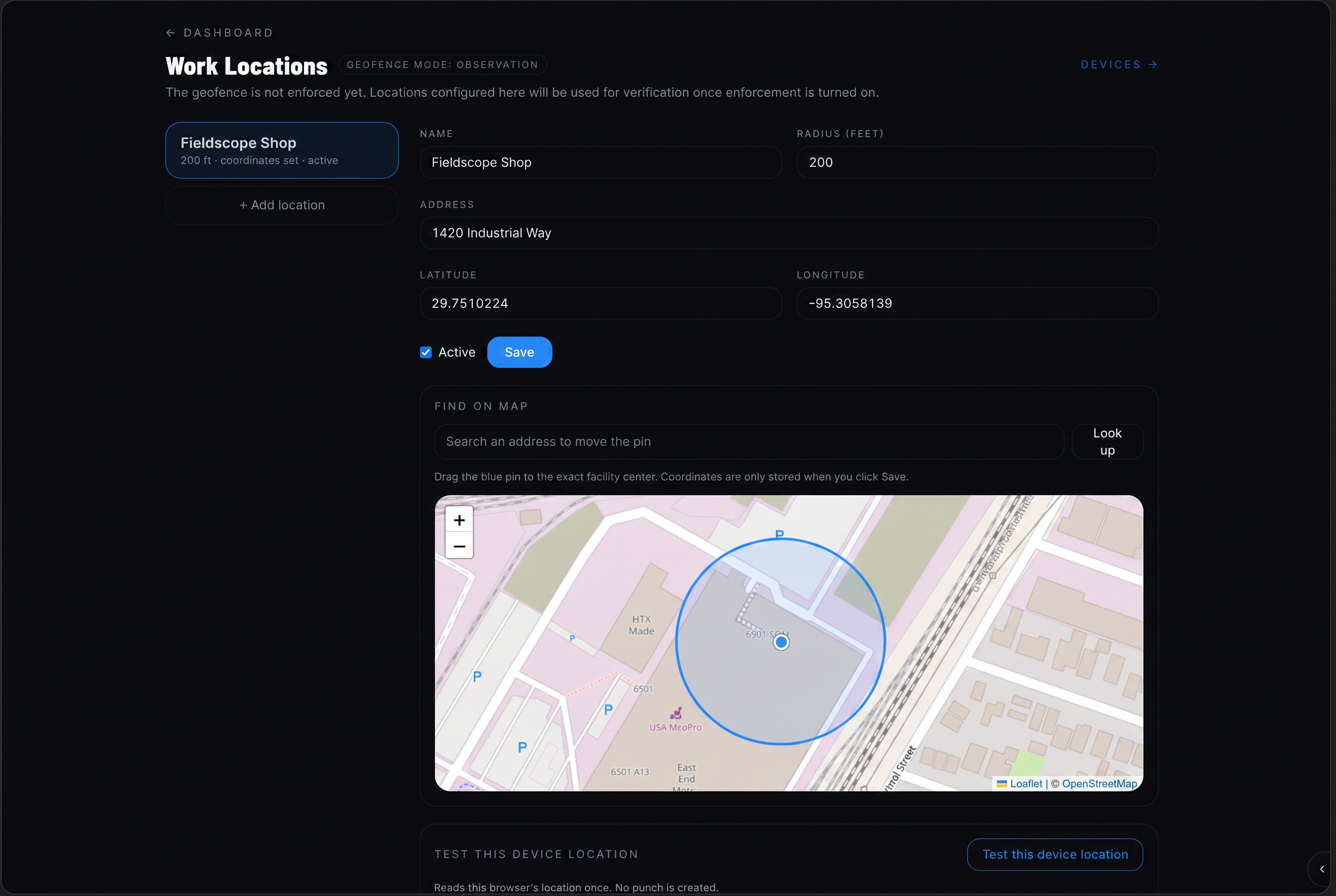
After launch, an employee was caught clocking in remotely from his phone before physically arriving on site. In response, a 200-meter geofence was added around the shop's kiosk location — clock-in attempts from outside that radius are automatically rejected, and the shop manager receives a real-time notification of the attempt. This required designating each device's role: shop-floor kiosks are geofence-enforced, while admin devices are flagged to access the system from anywhere, so managers and owners aren't locked out when they're off-site. This came from monitoring the product in the wild and responding to actual misuse, not a theoretical edge case caught in testing.
Scope Discipline
A task-based clock-in feature (supporting different pay rates for different tasks) was designed but intentionally held back at the client's request — to be activated once the team's size and complexity actually warrant it, rather than shipping unused complexity on day one. The same reasoning applied to QuickBooks sync, which was declined for the same integration-risk reasons as in the Fieldscope Builder CRM.
Outcome
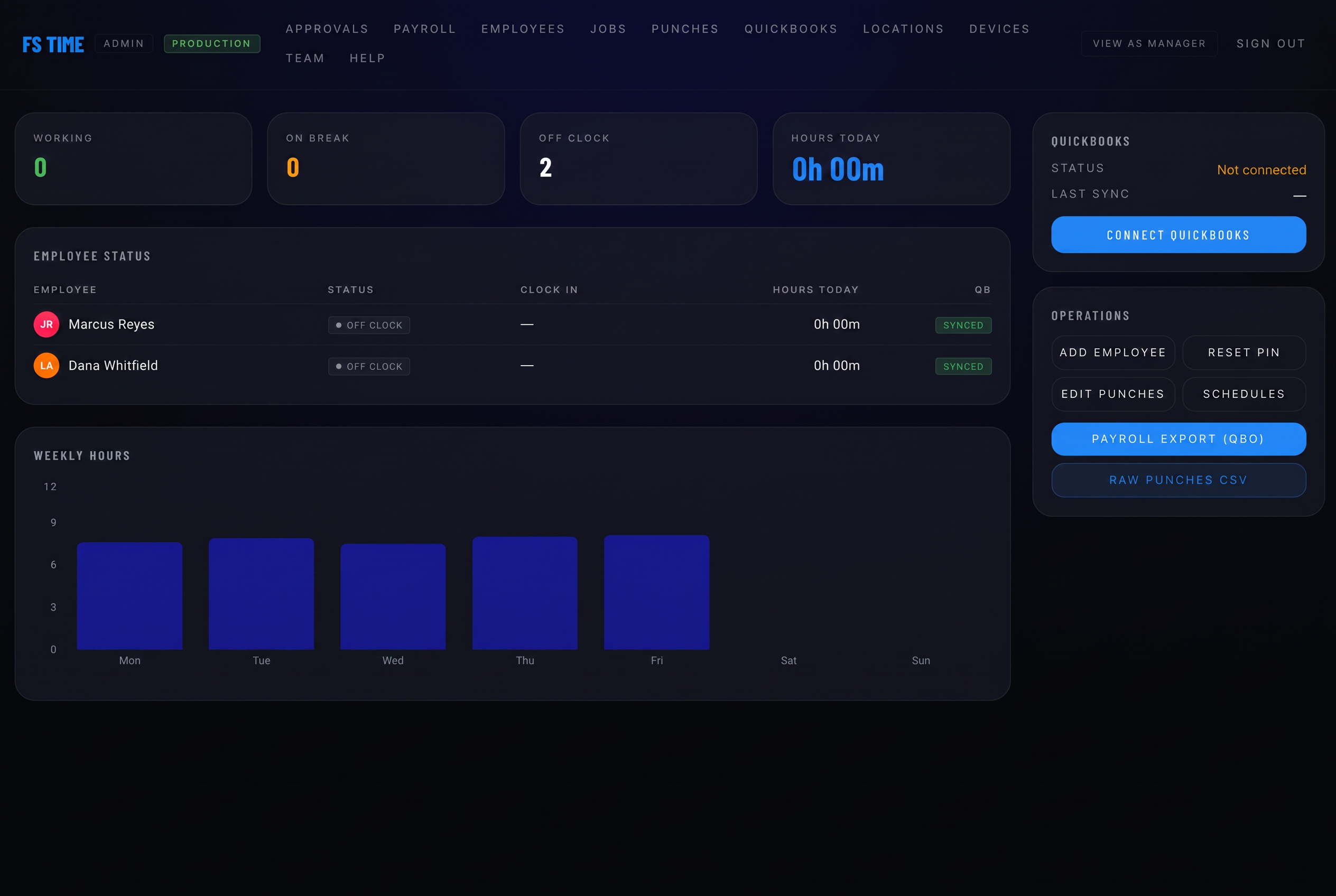
Live and used daily. Has measurably reduced hour over-reporting, improved accountability, and given the company clean, structured data for PTO and overtime tracking — replacing what had been an entirely word-of-mouth system.
Next project
Freedom Sales Hub
500–1000Field reps tracked in real time
Read case study